Games
The three Fire Emblem titles released for Game Boy Advance.
| GBA Trilogy |
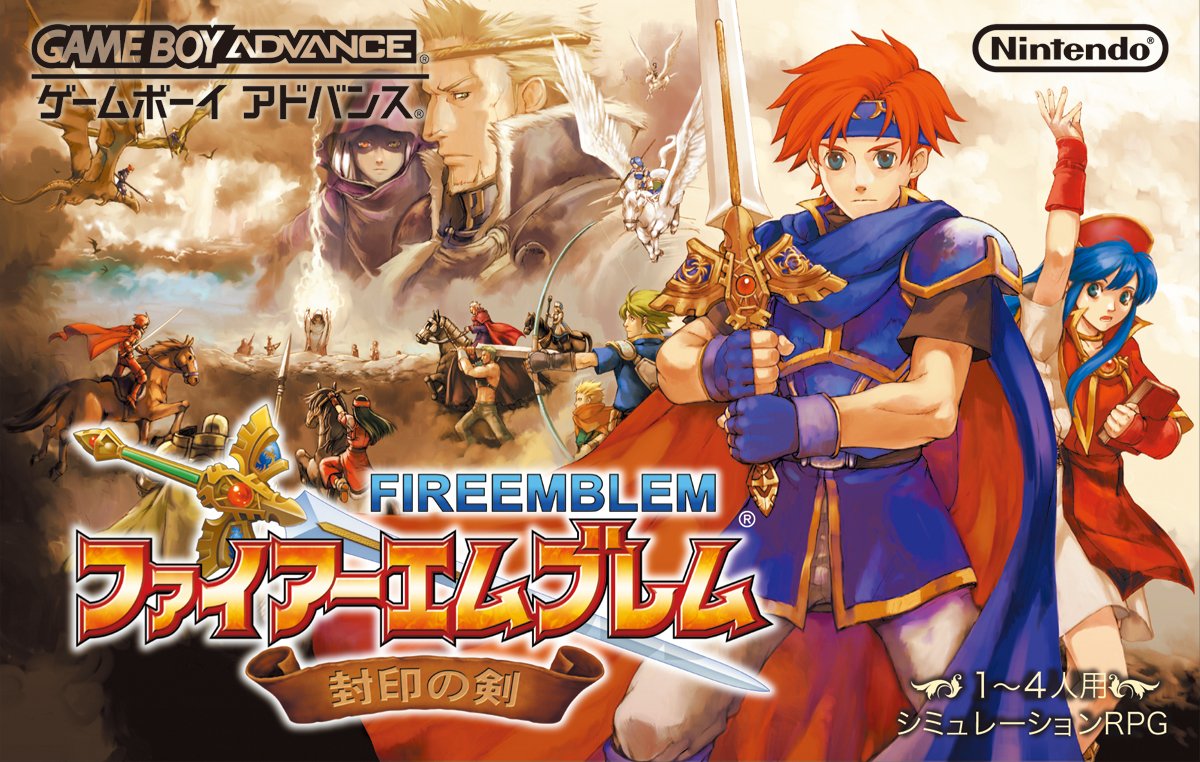
Fire Emblem: The Binding Bladeファイアーエムブレム 封印の剣
Game Boy Advance · 2002-03-29 · Roy
The sixth installment in the Fire Emblem series, following Roy as he leads the Lycian League against the forces of Bern. Set twenty years after the events of The Blazing Blade, the story follows young lord Roy of Pherae as he takes command of the Lycian army after his father Eliwood falls ill. King Zephiel of Bern has launched a campaign to conquer the continent of Elibe, seeking to return the world to the dragons who once ruled it. Roy must unite the nations of Elibe, uncover the legendary weapons sealed away after the Scouring, and ultimately confront Zephiel and the dark forces behind his ambition. The Binding Blade introduced the support conversation system that would become a series staple, allowing characters to build relationships through repeated proximity in battle. The game features a branching path in its later chapters and multiple endings depending on whether the player collects all divine weapons and meets specific requirements to unlock the true final chapter. Though never officially released outside Japan, it remains beloved for its challenging difficulty — often considered the hardest of the GBA trilogy — its large cast of recruitable characters, and its connection to the internationally released prequel. Roy's later inclusion in Super Smash Bros. Melee introduced him to Western audiences before they could even play his game.
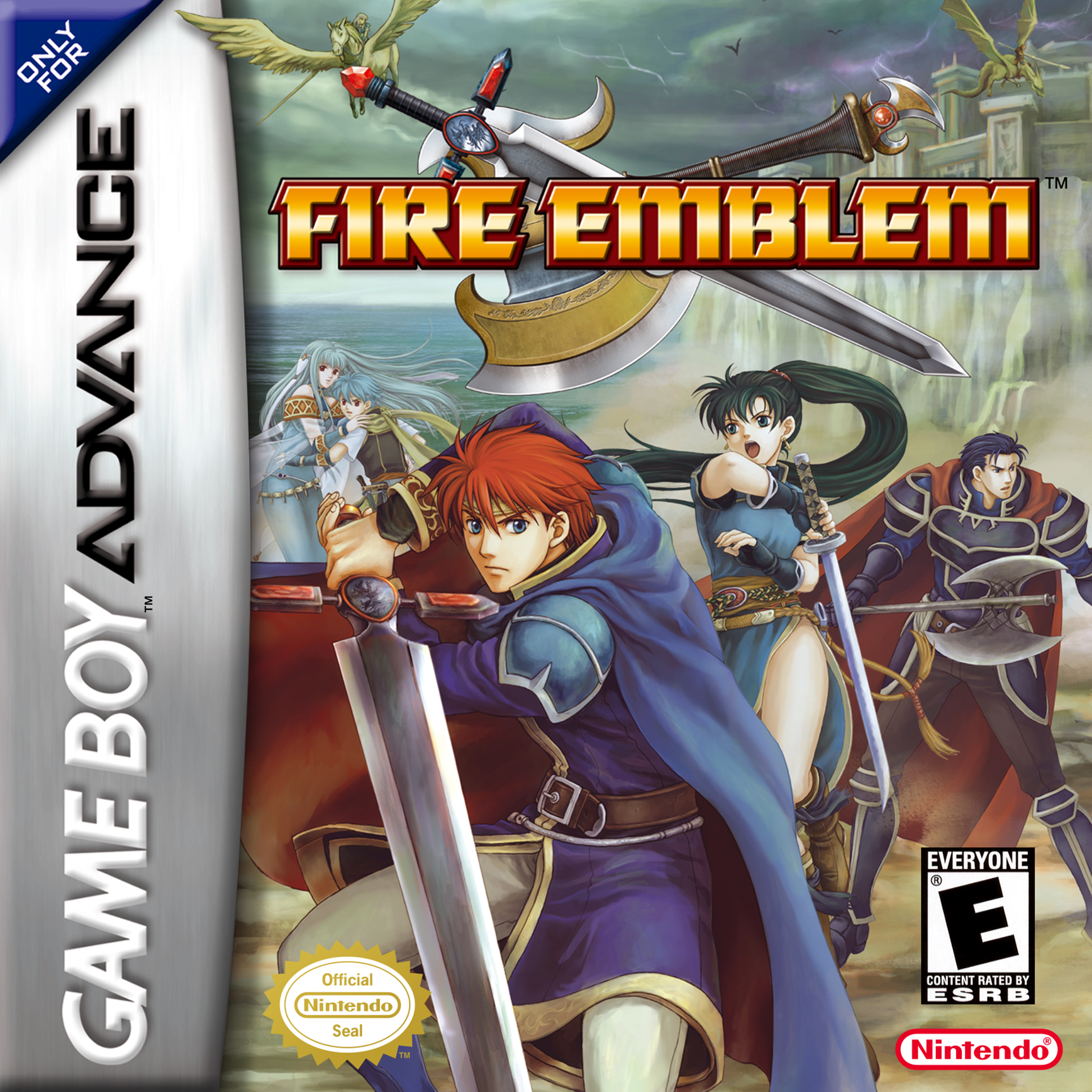
Fire Emblem: The Blazing Bladeファイアーエムブレム 烈火の剣
Game Boy Advance · 2003-04-25 · Lyn, Eliwood, Hector
The first Fire Emblem game released outside Japan, serving as a prequel to The Binding Blade. Known simply as 'Fire Emblem' in Western markets, The Blazing Blade introduced the series to international audiences and became a landmark title for tactical RPGs worldwide. The story is divided into two arcs: Lyn's Tale serves as an extended tutorial following the Sacaean plainswoman Lyndis as she discovers her noble Caelin heritage, while the main campaign follows lords Eliwood and Hector as they search for Eliwood's missing father and uncover a conspiracy involving the enigmatic Black Fang assassin guild and the dark sorcerer Nergal, who seeks to open the Dragon's Gate and summon powerful dragons back into the world. The game pioneered the use of a player avatar character — the Tactician — who is directly addressed by characters throughout the story, creating an unprecedented personal connection to the narrative. It also introduced Hector Mode, an alternate harder campaign from a different lord's perspective, adding significant replay value. Its refined gameplay mechanics, memorable cast including fan-favorites like Hector, Matthew, and Serra, and its accessible yet deep strategic systems set the standard for the series going forward. The Blazing Blade is widely credited with establishing Fire Emblem as a global franchise and remains one of the most recommended entry points for newcomers to the tactical RPG genre.
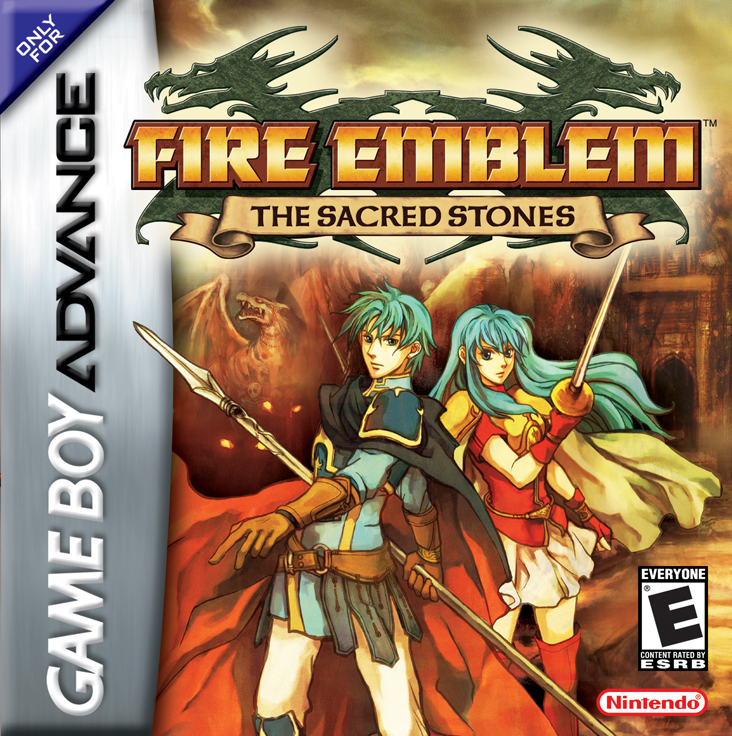
Fire Emblem: The Sacred Stonesファイアーエムブレム 聖魔の光石
Game Boy Advance · 2004-10-07 · Eirika, Ephraim
Set on the continent of Magvel, following twins Eirika and Ephraim as they fight to save their homeland of Renais from the Grado Empire. The Sacred Stones stands apart from other GBA Fire Emblem titles with its standalone story unconnected to the Elibe saga and its introduction of several major gameplay innovations. When Emperor Vigarde of Grado unexpectedly invades Renais and shatters its Sacred Stone, the twin heirs are separated — Eirika embarking on a diplomatic mission to seek allies while Ephraim leads a bold guerrilla campaign behind enemy lines. The narrative explores themes of friendship, betrayal, and the corruption of power as the true threat behind the war is gradually revealed to be the sealed Demon King Fomortiis. The Sacred Stones introduced a traversable world map with optional monster skirmishes and the Tower of Valni, making it the first GBA entry to allow grinding for experience — a controversial but popular addition that divided the fanbase. It also featured branching class promotions, giving players meaningful choices in character development: a Cavalier could become either a Paladin or a Great Knight, each with distinct stat growths and weapon access. The game introduced the Summoner and Great Knight classes, route splits letting players choose between Eirika's and Ephraim's storyline paths, and a post-game dungeon called the Lagdou Ruins. While considered the most accessible of the GBA trilogy, it remains a fan favorite for its polished presentation, its compelling tragic villain Lyon, and its exceptional replayability.